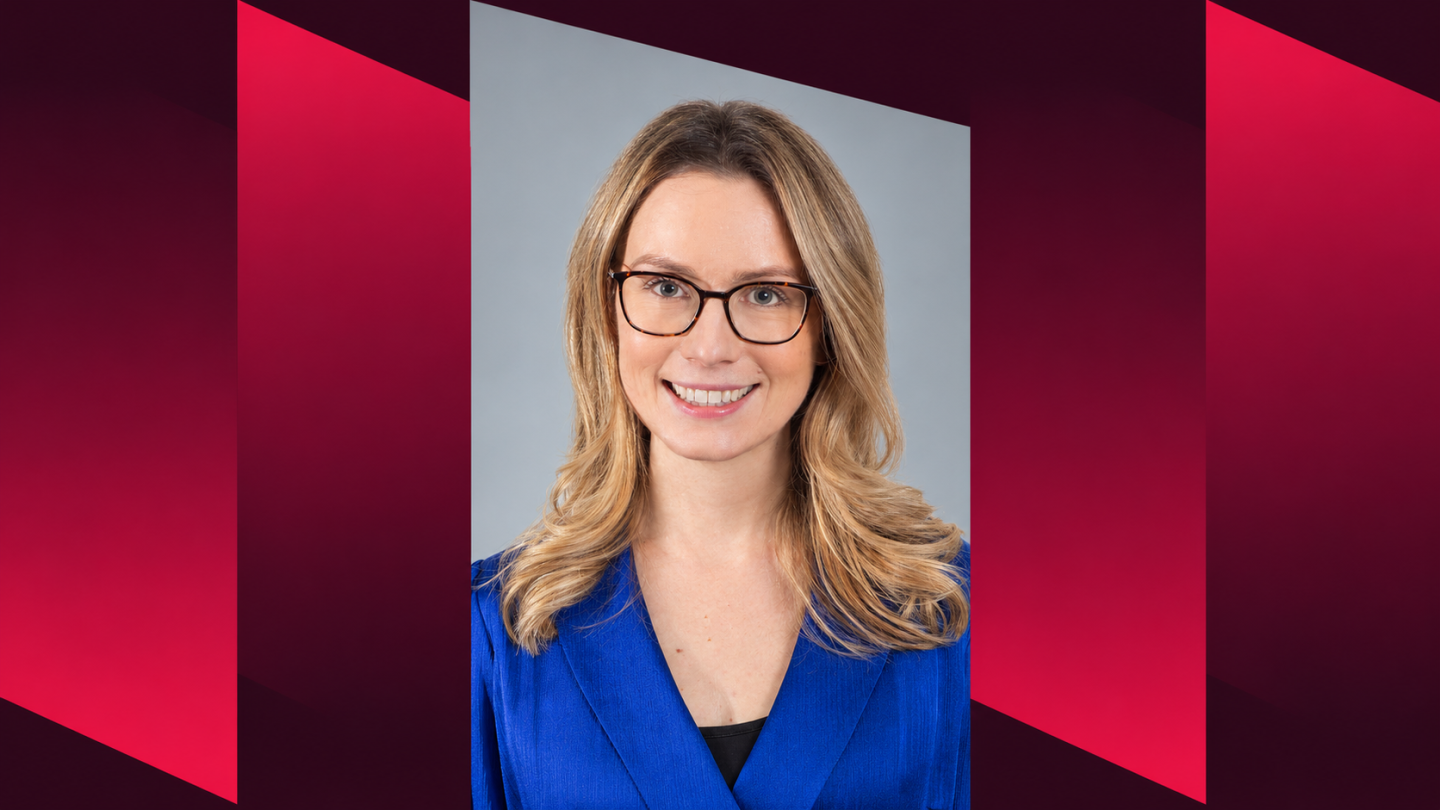
Machine learning en AI worden steeds breder ingezet in de beleggingswereld. Hania Schmidt van Goldman Sachs Asset Management legt uit waar de voorsprong van quantbeleggen anno 2026 vandaan komt.
Ondanks de stormachtige opkomst van kunstmatige intelligentie, is de mens nog lang niet weg te denken in de wereld van kwantitatief beleggen. Het Quantitative Investment Strategies-team (QIS) van Goldman Sachs draait al sinds 1989 mee en zag machine learning, natural language processing en transformermodellen uitgroeien tot gereedschap dat voor iedereen beschikbaar is. Juist daarom zit de voorsprong ergens anders, zegt Hania Schmidt (Head of QIS EMEA & Global Co-Head of CPM bij Goldman Sachs Asset Management: “De technologie verandert razendsnel en de hoeveelheid data is geëxplodeerd. Maar allebei brengen ze je op zichzelf niet ver. Het gaat erom wat je ermee doet. En als wij iets kunnen, moeten we ervan uitgaan dat anderen het ook kunnen. Dus blijven we voortdurend gaten prikken in ons eigen model.”
Luisteren naar de kwartaalcijfers
Een goed voorbeeld van de veranderingen is de wijze waarop kwartaalcijfers van bedrijven langs de meetlat worden gelegd. Ruim tien jaar lang lazen de modellen van het team met natural language processing nieuwsberichten, persberichten en transcripten van earnings calls. Inmiddels luisteren ze rechtstreeks naar de audio. Daarbij wordt onder meer gekeken hoe zelfverzekerd de CEO klinkt en hoe overtuigend de antwoorden zijn die worden gegeven. “Dat was vijf of zes jaar geleden nog onmogelijk”, zegt Schmidt. “De technologie is nieuw, maar het idee niet. We wilden het sentiment rond kwartaalcijfers al veel langer vangen.”
Alle signalen vallen uiteen in vier groepen: sentiment, thema’s en trends, waardering en kwaliteit. Voor de tweede groep visualiseert het team de 15.000 aandelen in het universum als een multidimensionale wereldbol van onderlinge verbanden. Goed nieuws over een bedrijf kan dan aanleiding zijn om positie te kiezen in een toeleverancier die nog niet op de radar staat van andere beleggers. Samen vormen de signalen een mozaïek van ruim een biljoen datapunten, dat elke dag wordt ververst. De lat voor het toevoegen van nieuwe signalen aan het model ligt hoog. Minder dan een kwart van de onderzoeksprojecten haalt het model. Schmidt: “We beginnen nooit bij de data, maar bij een hypothese. Als we een verband niet economisch kunnen verklaren, beleggen we er niet op.”
Een beetje actief loont het meest
Ondanks dat er signalen opgepikt worden die voor andere beleggers verborgen blijven, wijkt de portefeuille niet heel sterk af van de index. Uit eigen onderzoek van Goldman Sachs komt namelijk naar voren dat juist de eerste eenheden actief risico het best worden beloond. De informatieratio piekt historisch bij een lage tracking error van doorgaans 100 tot 200 basispunten. “Een beetje actief is veel waard”, vertelt Schmidt: “Je richt je op je beste ideeën, terwijl je dicht bij de sector- en landenwegingen van de index blijft en geen stijlafwijkingen oploopt. Zo combineer je de voorspelbaarheid van passief met de selectiviteit van actief.”
Die middenweg wordt steeds interessanter door de veranderende marktomstandigheden. In de periode tussen 2015 en 2025 stroomde ongeveer $3,5 biljoen van actieve naar passieve fondsen. Particulieren zijn goed voor circa een vijfde van het Amerikaanse handelsvolume. Steeds meer marktpartijen volgen daardoor niet langer het fundamentele draaiboek, zodat prijsverstoringen soms maanden aan houden. Voor datagedreven beleggers is dat een kans. Passief meeliften betekent bovendien meeliften op een uitzonderlijke concentratie, nu de tien grootste aandelen bijna 40% van de S&P 500 uitmaken. Schmidt: “In dit tijdperk van concentratie zien we de meeste vraag naar de twee uiteinden van het spectrum: enhanced indexing met een lage tracking error en long/short-extensies die de knellende band tussen indexgewicht en onderweging doorknippen.”
De aanpak is bovendien maatwerk, van de hoogte van de tracking error tot het universum. Pensioenfondsen en verzekeraars met grote passieve boeken gebruiken de strategie als eerste stap richting actief, vaak met een eigen duurzaamheidsbeleid. “We scheiden het duurzaamheidsprogramma van de alpha erbovenop, zodat precies te zien is waar het rendement vandaan komt. Bij wealth managers en adviseurs dient de strategie juist als liquide kern naast geconcentreerde satelliet-posities.”
De mens tekent af
Geen enkele transactie verlaat het model automatisch. De portefeuillemanagers tekenen elke order persoonlijk af. “Juist dat moment van nadenken over wat het model kan missen, is cruciaal”, benadrukt Schmidt: “Toen corona uitbrak, bestond er geen data over pandemieën. Dan moet de mens ingrijpen, net zoals bijvoorbeeld bij een staatsgreep of een plotselinge geopolitieke schok.”
Datzelfde geldt voor de risico’s die quantstrategieën zelf aankleven, zoals crowding en abrupte stijlrotaties. Alle gegevens worden daarom in eigen huis en in ruwe vorm verwerkt, zodat elke positie tot de bron herleidbaar blijft. “Hoe meer complexiteit je toevoegt, hoe belangrijker transparantie wordt. Onze klanten moeten elke handelsbeslissing kunnen begrijpen, in termen van sectoren, thema’s en aandelen in plaats van abstracte factoren. Het grootste risico voor quant ontstaat zodra de mens uit de besluitvorming verdwijnt. Data wordt steeds meer een commodity. Wie er aan het stuur zit, bepaalt het komende decennium welke vermogensbeheerder zich onderscheidt. Het zijn spannende tijden om quant te zijn.”
RISK CONSIDERATIONS
Diversification does not protect an investor from market risk and does not ensure a profit.
DISCLOSURES
Equity investments are subject to market risk, which means that the value of the securities in which it invests may go up or down in response to the prospects of individual companies, particular sectors and/or general economic conditions. Different investment styles (e.g., “growth” and “value”) tend to shift in and out of favor, and, at times,
The strategy may underperform other strategies that invest in similar asset classes. The market capitalization of a company may also involve greater risks (e.g. “small” or “mid” cap companies) than those associated with larger, more established companies and may be subject to more abrupt or erratic price movements, in addition to lower liquidity.
References to indices, benchmarks or other measures of relative market performance over a specified period of time are provided for your information only and do not imply that the portfolio will achieve similar results. The index composition may not reflect the manner in which a portfolio is constructed. While an adviser seeks to design a portfolio which reflects appropriate risk and return features, portfolio characteristics may deviate from those of the benchmark.
Economic and market forecasts presented herein reflect a series of assumptions and judgments as of the date of this presentation and are subject to change without notice. These forecasts do not take into account the specific investment objectives, restrictions, tax and financial situation or other needs of any specific client. Actual data will vary and may not be reflected here. These forecasts are subject to high levels of uncertainty that may affect actual performance. Accordingly, these forecasts should be viewed as merely representative of a broad range of possible outcomes. These forecasts are estimated, based on assumptions, and are subject to significant revision and may change materially as economic and market conditions change. Goldman Sachs has no obligation to provide updates or changes to these forecasts. Case studies and examples are for illustrative purposes only.
THIS MATERIAL DOES NOT CONSTITUTE AN OFFER OR SOLICITATION IN ANY JURISDICTION WHERE OR TO ANY PERSON TO WHOM IT WOULD BE UNAUTHORIZED OR UNLAWFUL TO DO SO.
Prospective investors should inform themselves as to any applicable legal requirements and taxation and exchange control regulations in the countries of their citizenship, residence or domicile which might be relevant.
This material is provided for educational purposes only and should not be construed as investment advice or an offer or solicitation to buy or sell securities. This material is not intended to be used as a general guide to investing, or as a source of any specific investment recommendations, and makes no implied or express recommendations concerning the manner in which any client’s account should or would be handled, as appropriate investment strategies depend upon the client’s investment objectives.
Index Benchmarks
Indices are unmanaged. The figures for the index reflect the reinvestment of all income or dividends, as applicable, but do not reflect the deduction of any fees or expenses which would reduce returns. Investors cannot invest directly in indices.
The indices referenced herein have been selected because they are well known, easily recognized by investors, and reflect those indices that the Investment Manager believes, in part based on industry practice, provide a suitable benchmark against which to evaluate the investment or broader market described herein.
Neither MSCI nor any other party involved in or related to compiling, computing, or creating the MSCI data makes any express or implied warranties or representations with respect to such data (or the results to be obtained by the use thereof), and all such parties hereby expressly disclaim all warranties of originality, accuracy, completeness, merchantability, or fitness for a particular purpose with respect to any of such data. Without limiting any of the foregoing, in no event shall MSCI, any of its affiliates or any third party involved in or related to compiling, computing or creating the data have any liability for any direct, indirect, special, punitive, consequential or any other damages (including lost profits) even if notified of the possibility of such damages. No further distribution or dissemination of the MSCI data is permitted without MSCl’s express written consent.
Past performance does not guarantee future results, which may vary. The value of investments and the income derived from investments will fluctuate and can go down as well as up. A loss of principal may occur.
This information discusses general market activity, industry or sector trends, or other broad-based economic, market or political conditions and should not be construed as research or investment advice. This material has been prepared by Goldman Sachs Asset Management and is not financial research nor a product of Goldman Sachs Global Investment Research (GIR}. It was not prepared in compliance with applicable provisions of law designed to promote the independence of financial analysis and is not subject to a prohibition on trading following the distribution of financial research. The views and opinions expressed may differ from those of Goldman Sachs Global Investment Research or other departments or divisions of Goldman Sachs and its affiliates. Investors are urged to consult with their financial advisors before buying or selling any securities. This information may not be current and Goldman Sachs Asset Management has no obligation to provide any updates or changes.
The portfolio risk management process includes an effort to monitor and manage risk, but does not imply low risk.
Views and opinions expressed are for informational purposes only and do not constitute a recommendation by Goldman Sachs Asset Management to buy, sell, or hold any security. Views and opinions are current as of the date of this publication and may be subject to change, they should not be construed as investment advice.
Individual portfolio management teams for Goldman Sachs Asset Management may have views and opinions and/or make investment decisions that, in certain instances, may not always be consistent with the views and opinions expressed herein.
There is no guarantee that objectives will be met. Capital is at risk.
This material is for informational purposes only. It has not been, and will not be, registered with or reviewed or approved by your local regulator. This material does not constitute an offer or solicitation in any jurisdiction. If you do not understand the contents of these materials, you should consult an authorised financial adviser.
The QIS Equity Alpha team leverages Natural Language Processing (NLP) techniques and advanced transformer technology within deep learning models to analyze text and audio. Natural language processing (NLP) is an interdisciplinary subfield of computer science and linguistics, primarily concerned with giving computers the ability to support and manipulate human language. This analysis is designed to help inform portfolio management decisions and is one data point among many to make investment decisions which is subject to human supervision. All investment decisions are made by human portfolio managers.
European Economic Area (EEA): This marketing communication is disseminated by Goldman Sachs Asset Management B.V., including through its branches (“GSAM BY”). GSAM BY is authorised and regulated by the Dutch Authority for the Financial Markets (Autoriteit Financiele Markten, Vijzelgracht 50, 1017 HS Amsterdam, The Netherlands) as an alternative investment fund manager (“AIFM”) as well as a manager of undertakings for collective investment in transferable securities (“UCITS”). Under its licence as an AIFM, the Manager is authorized to provide the investment services of (i) reception and transmission of orders in financial instruments; (ii) portfolio management; and (iii) investment advice. Under its licence as a manager of UCITS, the Manager is authorized to provide the investment services of (i) portfolio management; and (ii) investment advice.
Information about investor rights and collective redress mechanisms are available on am.gs.com/policies-and-governance. Capital is at risk. Any claims arising out of or in connection with the terms and conditions of this disclaimer are governed by Dutch law.
CONFIDENTIALITY
No part of this material may, without Goldman Sachs Asset Management’s prior written consent, be (i) copied, photocopied or duplicated in any form, by any means, or (ii) distributed to any person that is not an employee, officer, director, or authorized agent of the recipient.
© 2026 Goldman Sachs. All rights reserved.
Date of first use: November 17, 2026. 538106-OTU-2634341